


Turtle Season 2017
Trips16/06/2017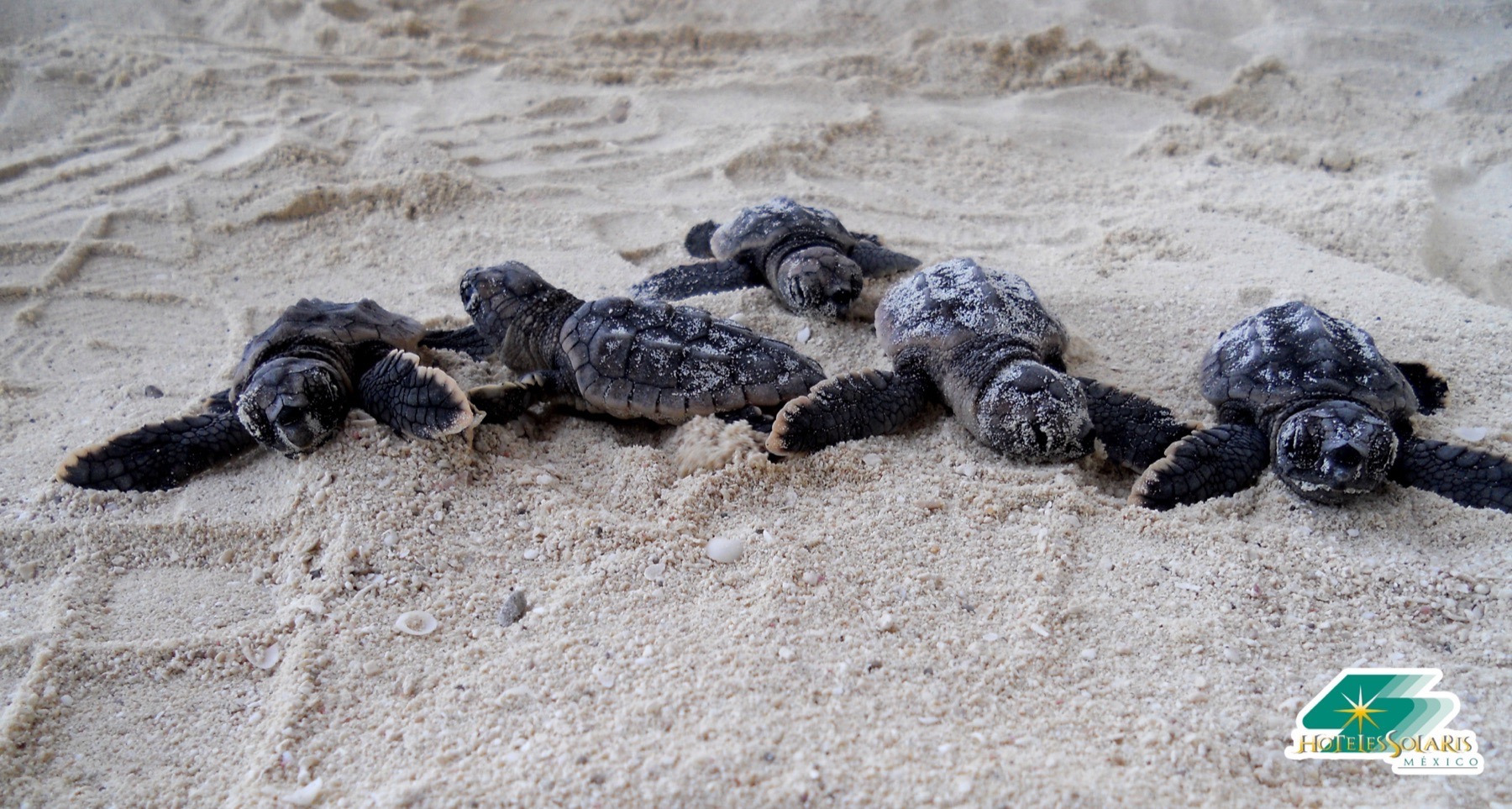
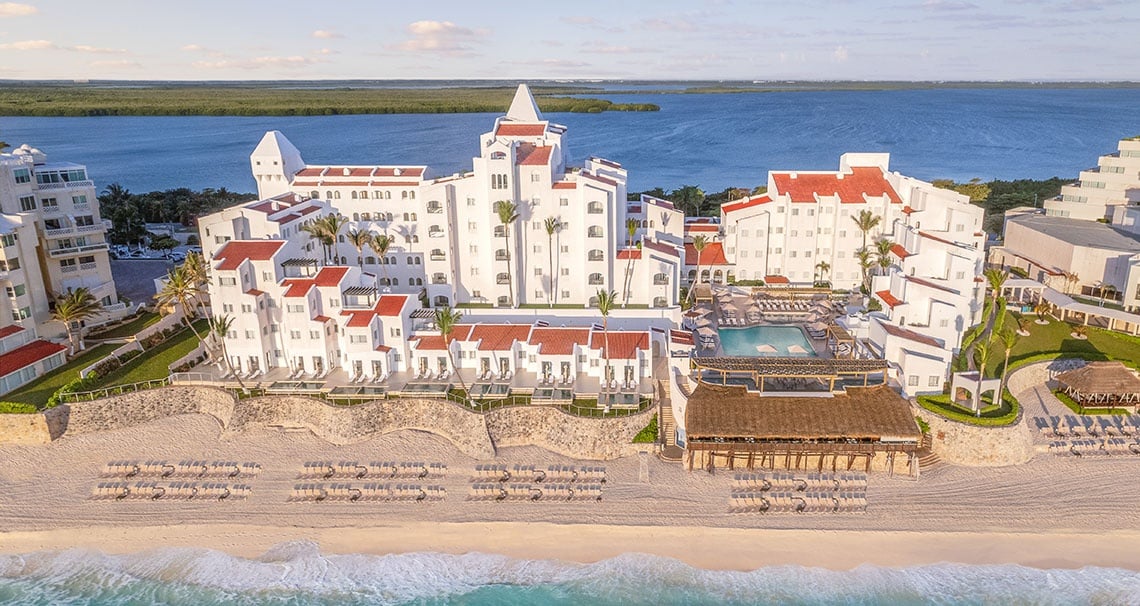
As every year, from May to September, we experience the Sea Turtle season in the Mexican Caribbean. Hoteles Solaris de México is prepared to welcome this wonderful marine species and protect its hatchlings.
Around the world, there are 8 species of sea turtles, of which only 4 come to nest on our beautiful beaches in Cancun. These are the LOGGERHEAD, the GREEN, the HAWKSBILL, and the LEATHERBACK. The leatherback turtle has never been seen on our hotel's beach.
During the first fortnight of May, turtle mating begins, which lasts approximately 24 hours. The male turtle undertakes a great ritual to impress the female, copulating on the surface.
At the end of May, the egg-laying process occurs, which consists of the following steps:
- They emerge from the sea in a straight line.
- They select the nesting site.
- They remove the sand to make a bed (the place where the nest will be).
- They dig an incubation chamber.
- They lay between 80 to 200 eggs per turtle (depending on the species).
- They cover the incubation chamber along with the eggs to protect them.
- They return to the sea in a straight line.
Turtles only lay eggs at night and this process takes about 3 hours from the moment they emerge from the sea. When they make contact with the air, they secrete a liquid from their eyes, which helps protect them from the sand while digging the nest; they do NOT cry. Incubation lasts approximately 45 to 70 days, depending on the turtle species and the climate surrounding the nests. Turtles lay eggs 1 to 5 times per season.
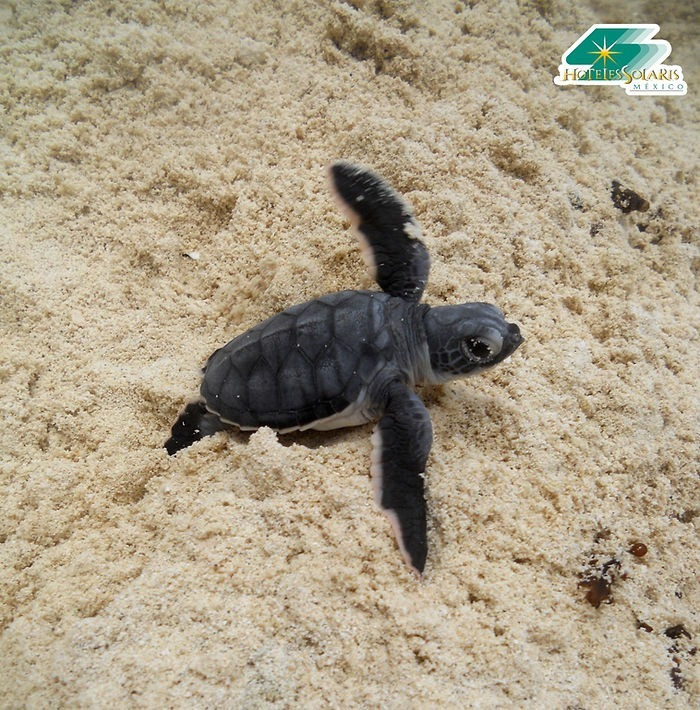
The process we have for the "Sea Turtle Protection and Conservation Program on Cancun beaches" is that as soon as the turtle touches our hotel beach, it is the responsibility of qualified personnel to help relocate all the eggs into a "protection corral" so they can be monitored and cared for until they hatch.
One must wait for the turtle to begin laying eggs to take each one, and upon finishing, dig a chamber-shaped hole inside the "protection corral" (in the same way the turtle does) about 60 cm deep, smoothing the bottom to accommodate the eggs. This chamber is covered with sand, and a sign is made with the data regarding the number of eggs, the species of turtle, measurements, the laying date, and the probable hatching date.
During the incubation of the turtles, the prevention staff, who have taken courses taught by biologists working for the state conservation campaign on procedures to be followed for sea turtle conservation and nesting habits, are dedicated to the surveillance, care, and protection of the species in our hotel beach area. Days before hatching, a mesh is placed around the nest to protect the turtles' exit so they are not devoured by predators and can reach their release safely.
At the time of hatching, depending on the time of day, they are kept safe to be released when the predatory seabirds that feed on the hatchlings are not flying over the coast. It is said that the first 10 years of each turtle are called "Lost Years" because it is not known exactly where they go and very few of them survive, due to the long journey they take.
Year after year, the release that takes place on the coast of Quintana Roo becomes a celebration of the efforts of civil associations protecting this reptile and the local government.
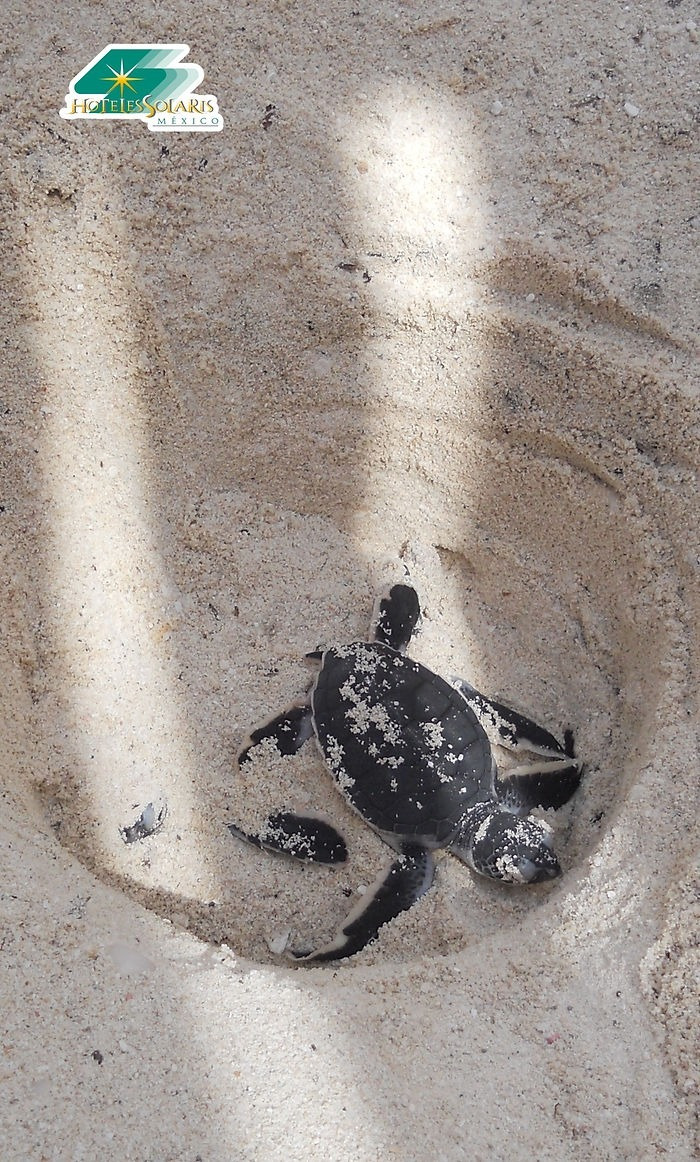
SEA TURTLE SEASON RULES
- Notify the prevention staff if you see a turtle during the night.
- Observe from a distance of 10 meters.
- Do not touch the turtle.
- Do not use flash.
- Do not smoke.
- Do not enter the egg protection corrals.
- Do not handle the hatchlings without prior authorization from qualified personnel.
- Keep the beaches and the sea clean by using trash cans. Remember that plastic bags, straws, plastic containers, and all types of trash that float in the sea are lethal to turtles.
If you have the opportunity to live and participate in the turtle release experience, it is important that you respect the staff's instructions and enjoy watching them head eagerly towards the immense sea to start their new journey.
AT OUR SOLARIS HOTELS IN CANCUN, WE HAVE 16 NESTS WITH 1905 EGGS EXPECTED TO HATCH IN THE NEXT TWO MONTHS.
Come and enjoy this beautiful experience at Solaris!